Nursing Drug Handbook - NDH
Unbound Medicine, IncMedical
4.57.00 Reviews
- Version
- 2.8.52
- Installs
- 10.00K
- Age Rating
- Everyone
Screenshots
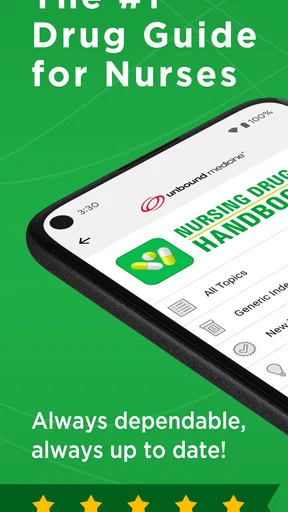
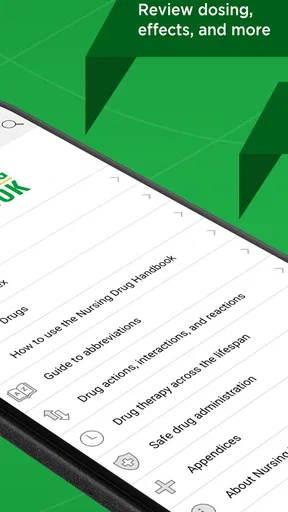
Our Review of Nursing Drug Handbook - NDH
 Analysis by Appyee
Choosing a medication reference is less about finding the longest list of drug names and more about finding a resource that fits the way you work. I’d ask three practical questions first: Can I locate a medicine quickly, does the entry help me think through nursing care rather than just identify the drug, and can I use the reference in the places where I need it? Nursing Drug Handbook - NDH is aimed squarely at those needs, especially for nurses and nursing students who want drug information alongside patient-care context.
Start with the task, not the feature list
For a quick drug lookup, a general medical search or a basic drug directory may be enough. But when I’m trying to connect a medication with its administration, monitoring, and patient teaching, a nursing-focused handbook has a more useful emphasis. That distinction matters: the best reference is not necessarily the one with the most material, but the one that helps you answer the question in front of you without losing sight of safe practice.
I see this app as a companion for checking and learning, not as a substitute for clinical judgment, local procedures, or a second check when a medication decision carries risk. A digital reference can make information easier to reach, but it cannot know the patient’s full situation. I would use it to orient myself and identify what to verify, then follow the appropriate clinical process rather than treating a screen as permission to act.
Where a nursing-centered handbook earns its place
The strongest reason to consider this particular app is its focus on the nursing side of medication knowledge. Drug entries are described with indications, dosages, side effects, nursing considerations, and patient teaching. That combination is more relevant to bedside preparation and student study than a short definition that only tells me what a drug is used for.
For example, a student reviewing a medicine before a clinical placement can use an entry to organize questions: What is the medication intended to do? What effects should I understand? What should I explain to a patient? The app can support that preparation, while the instructor, current clinical guidance, and the patient’s actual care plan remain essential. The useful habit is to treat the entry as a prompt for focused thinking, not as a ready-made care plan.
Searching by generic or brand name is another practical strength. In real conversations and coursework, a medicine may be referred to by either name, and being able to start with the term I recognize reduces friction. I would still pay close attention to the exact medicine selected rather than assuming that similar names refer to the same product. That small pause is worthwhile whenever a lookup is connected to patient care.
First Impressions: Smooth Sailing
When you first open up the Nursing Drug Handbook - NDH, you're greeted by a clean and intuitive interface. It’s straightforward, and that’s something I truly appreciate. No one wants to sift through complicated menus when they’re in the middle of a busy shift, right? The search function is right at the top, making it super easy to find what you need, stat!
Features That Stand Out
One of the first things that jumped out at me was the sheer comprehensiveness of the drug database. It’s like having a mini encyclopedia right in your pocket. You can search for drugs either by their generic or brand name, which is a lifesaver when you’re dealing with multiple names for the same medication.
What’s really cool is the detailed information provided for each drug. You get the usual suspects like indications, dosages, and side effects, but the app goes a step further by including nursing considerations and patient teaching. This is golden for anyone who needs to provide care instructions on the fly.
Easy Navigation and Accessibility
The app makes it incredibly easy to navigate through its features. With just a few taps, you can switch from one drug profile to another. Plus, the app supports offline access, which is a godsend if you’re working in a hospital with patchy Wi-Fi.
Another neat feature is the favorites list. You can bookmark drugs you frequently look up, saving you precious time. It’s these small touches that make the app feel like it was designed with real-world use in mind.
Interactive Tools and Resources
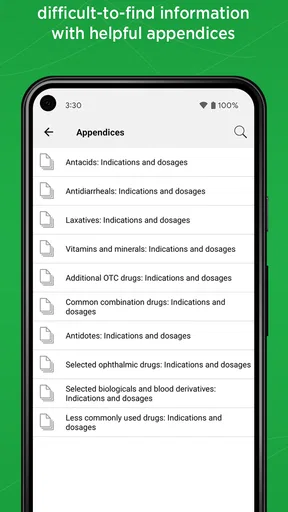
A pleasant surprise was the inclusion of various interactive tools and calculators. From dosage calculators to medical abbreviations, these extras are like having a Swiss Army knife on your phone. They’re especially helpful for students or new nurses who are still getting the hang of things.
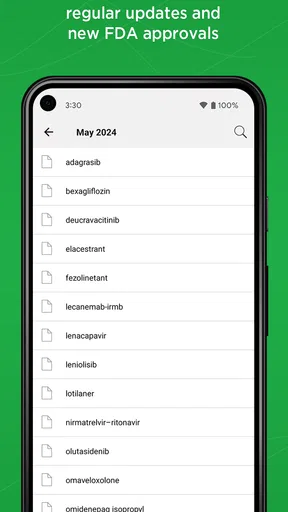
There’s also a section for drug updates, ensuring you’re always in the loop about the latest in the pharmaceutical world. It’s like having a news feed focused solely on medication changes.
What Could Be Better?
While the Nursing Drug Handbook - NDH is packed with features, it’s not without its hiccups. Occasionally, the app can be a bit sluggish, especially when loading detailed drug profiles. It’s not a dealbreaker, but it can be frustrating when you’re in a hurry.
Also, some users might find the sheer amount of information a bit overwhelming at first. A more streamlined tutorial or onboarding process could help new users get acclimated more quickly.
Offline use, study habits, and real shift pressure
Offline access is most valuable when planned for rather than discovered at the last moment. I’d open the handbook while connected, find the medicines I expect to review, and save likely repeat lookups in favorites. That gives me a quicker route back to familiar entries if the connection is unreliable. I would not assume that an offline reference automatically reflects the latest changes, though; when a current update matters, I’d check the update section while online and follow the clinical resources required at work.
Favorites can also do more than shorten a search. A student could keep a small set of medicines tied to a current class topic or placement, then revisit them for active recall: cover the entry, try to explain the medication’s purpose and nursing considerations, and check the details afterward. That turns a lookup tool into a lightweight study routine without pretending that a saved list is a complete syllabus or a patient-specific medication record.
Picture a student on a busy placement being asked about a medicine they have seen in class but cannot immediately recall. A quick search by the name they know can help them locate the profile, review the relevant nursing points, and prepare a more informed question for their supervisor. That is a realistic strength: it can reduce the time spent getting oriented. It should not become a reason to make an independent decision or to delay asking for help when the situation is urgent.
How it compares with other ways to look up medicines
Compared with a general web search, a handbook keeps the task focused on medication information and nursing context instead of sending me through unrelated pages. Compared with a compact drug dictionary, the broader style of entry may be more useful when I need to connect a drug with patient teaching and nursing considerations. The trade-off is that a fuller reference can take longer to scan, especially when I only need a simple definition.
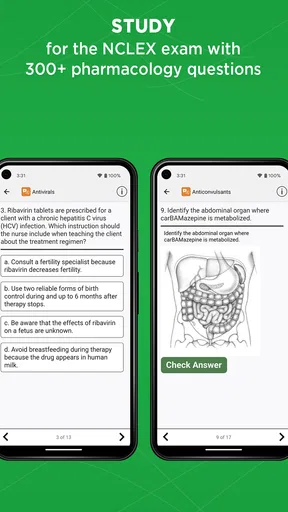
Institutional references and clinical systems may be a better fit when a workplace requires a particular source, workflow, or patient-specific check. A handbook on a personal phone cannot replace those requirements. Likewise, a student whose main goal is practicing exam-style questions may prefer a dedicated study resource for most of their revision. This app’s current edition includes NCLEX pharmacology questions, which gives it a study angle, but I would still compare the way I need to practice with what the app actually offers before making it my only exam-prep tool.
The practical choice depends on the moment. For a quick, broad web search, a browser may feel faster. For a structured nursing-oriented drug review, this handbook has a clearer purpose. For a decision that must follow a facility protocol or account for a specific patient, the official clinical process takes priority. I would keep those roles distinct instead of expecting one app to cover every medication task.
Who will get the most from it—and who may not
I think the best fit is a nursing student building medication knowledge or a practicing nurse who wants a portable reference for review and preparation. It is particularly useful for someone who learns by moving between a drug’s basic purpose and the nursing questions that follow from it. The brand-and-generic search approach can also help when class notes, conversations, or a patient’s medication list use different naming conventions.
It is less suitable as a stand-alone tool for people who need patient-specific prescribing guidance, a substitute for workplace-approved references, or a complete structured course in pharmacology. A new learner may also need time to become comfortable with the volume of material. I would begin with a few familiar medicines, learn how their entries are organized, and then broaden my use rather than trying to absorb the whole reference at once.
What the price and edition mean in practice
The app is free to install, but it also offers in-app purchases at $39.99 per item. I would check what access is included before relying on it for a course or shift routine, and consider the purchase in light of how often I expect to use the full resource. The presence of a free download is useful for trying the app’s feel, but it does not mean every piece of content is necessarily available without an in-app purchase.
The current edition is presented as covering 2025–2026, with updates and NCLEX pharmacology questions. That makes the edition relevant to learners who want a current study-oriented reference, but I would still make a habit of checking update information and using authoritative, workplace-approved guidance for clinical decisions. The app is developed by Unbound Medicine, Inc, is rated for Everyone, and has a 4.6 average from around 76 ratings, with over 10K installs. It was released on May 16, 2023, and version 2.8.47 requires Android 9 or later.
One point I would settle before choosing it is whether the paid content matches my intended use. If I only need occasional basic lookups, I may prefer a reference already available through school or work. If I expect to use nursing-focused entries repeatedly and want the handbook’s study material, paying for the relevant item could make more sense. Checking that distinction early avoids building a routine around a section I have not actually unlocked.
Why You Should Give It a Shot
All things considered, the Nursing Drug Handbook - NDH is an invaluable tool for anyone in the nursing profession. Its extensive database, user-friendly interface, and handy tools make it a must-have app. Whether you're a seasoned nurse or just starting your journey, having such a comprehensive resource at your fingertips is a game-changer.
So, if you’re looking for an app that offers both depth and practicality, this might just be the one for you. Go ahead, download it, and see how it can make your daily grind a little smoother.
My recommendation after weighing the trade-offs
I’d try it if I were studying nursing or wanted a portable drug reference that gives nursing considerations and patient teaching a central place. I would first test the search and entry layout with medicines I already know, then decide whether its fuller content and learning tools suit my routine. That gives me a concrete sense of whether I can scan entries efficiently, rather than judging it only by how many topics it appears to cover.
I would skip it as my primary resource if I needed a replacement for facility guidance, patient-specific clinical systems, or a dedicated pharmacology course. I’d also think twice if I rarely consult drug references and already have an approved source that fits my work better. The app’s value depends on making repeated, relevant lookups easier—not on having another icon on my phone.
For me, its appeal is the combination of nursing-oriented drug information, offline access, favorites, and study support. The meaningful trade-off is that a detailed handbook can take time to learn and does not remove the need to verify information in context. If those limits fit your expectations, this is a sensible app to explore; if your priority is a required clinical workflow or a narrow, quick definition, another source may serve you better.
Verdict
Strengths of Nursing Drug Handbook - NDH
- Comprehensive drug database available offline.
- User-friendly interface with easy navigation.
- Regular updates with the latest drug info.
- Customizable alerts for drug interactions.
- Detailed dosage and administration guidelines.
Limitations of Nursing Drug Handbook - NDH
- Requires in-app purchases for full features.
- Occasional slow loading times reported.
- Limited customization of the interface.
- No option for dark mode viewing.
- Notifications can become overwhelming.
Other Releases by Unbound Medicine, Inc
View All
DSM-5-TR Differential Dx
Medical4.4

Nursing Central
Medical4.8

Davis's Drug Guide
Medical4.8

Johns Hopkins Antibiotic Guide
Medical4.8
Similar Picks in This Category
View All
WebMD: Symptom Checker
WebMD, LLC4.1

Microphone Amplifier
DOSA Apps4.2

Anatomy Learning - 3D Anatomy
3D Medical OU4.5

Period Tracker and Calendar
SimpleInnovation4.9

GoodRx: Prescription Coupons
GoodRx4.8

CVS Health
CVS Pharmacy4.5
Frequently Asked Questions
What features does the Nursing Drug Handbook app offer?
The Nursing Drug Handbook app provides comprehensive drug information, including dosages, side effects, interactions, and nursing considerations. It features a user-friendly interface for quick access to drug details, search functionality, and regular updates to ensure accurate information. Additionally, it supports offline access, making it a reliable tool for healthcare professionals.
Is the Nursing Drug Handbook app available for both Android and iOS devices?
Yes, the Nursing Drug Handbook app is available for download on both Android and iOS platforms. Users can find it on the Google Play Store for Android devices and the Apple App Store for iOS devices, allowing easy access for a wide range of users across different devices.
Does the Nursing Drug Handbook app require an internet connection to function?
While the app offers offline access to its comprehensive database, an internet connection is needed for initial setup and periodic updates. This ensures users have the most current drug information. However, once updated, users can access most features without an active internet connection, which is ideal for on-the-go use.
Are there any additional costs or subscriptions associated with the Nursing Drug Handbook app?
The app may offer a free basic version with limited features and a premium subscription for full access to its extensive database and advanced functionalities. Users should check the app store for specific pricing details and any in-app purchase options that might enhance their experience.
How is the content of the Nursing Drug Handbook app kept up-to-date?
The app developers regularly update its content to reflect the latest medical guidelines and drug information. These updates are crucial for ensuring the accuracy and reliability of the drug details provided. Users are encouraged to keep the app updated to benefit from the most recent information.
